SCOURING HEAVEN AND EARTH (2024) at TREX Space, Medicine Hat, Alberta
CURATORIAL STATEMENT by Sierra Zukowski, TREX Region 4
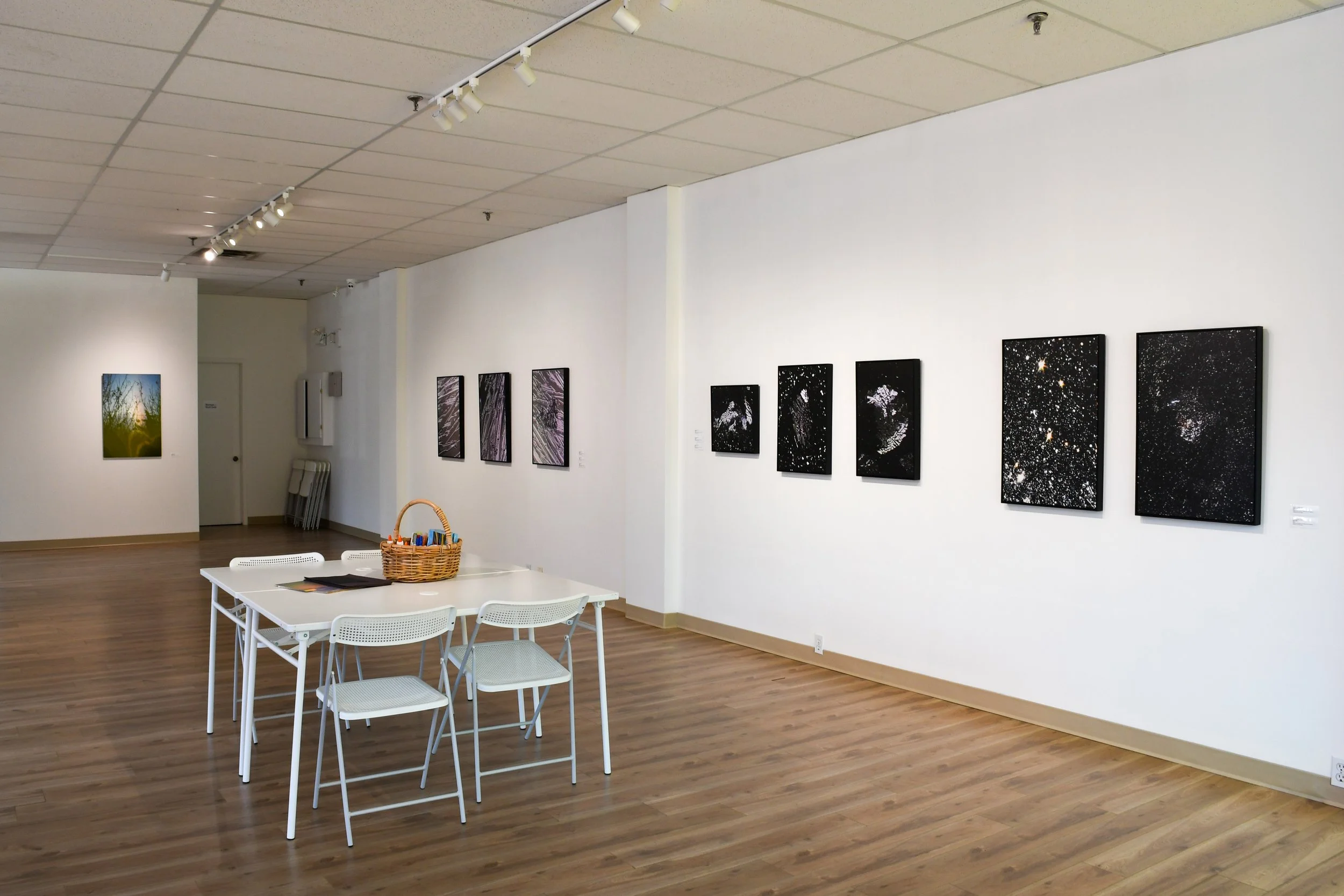
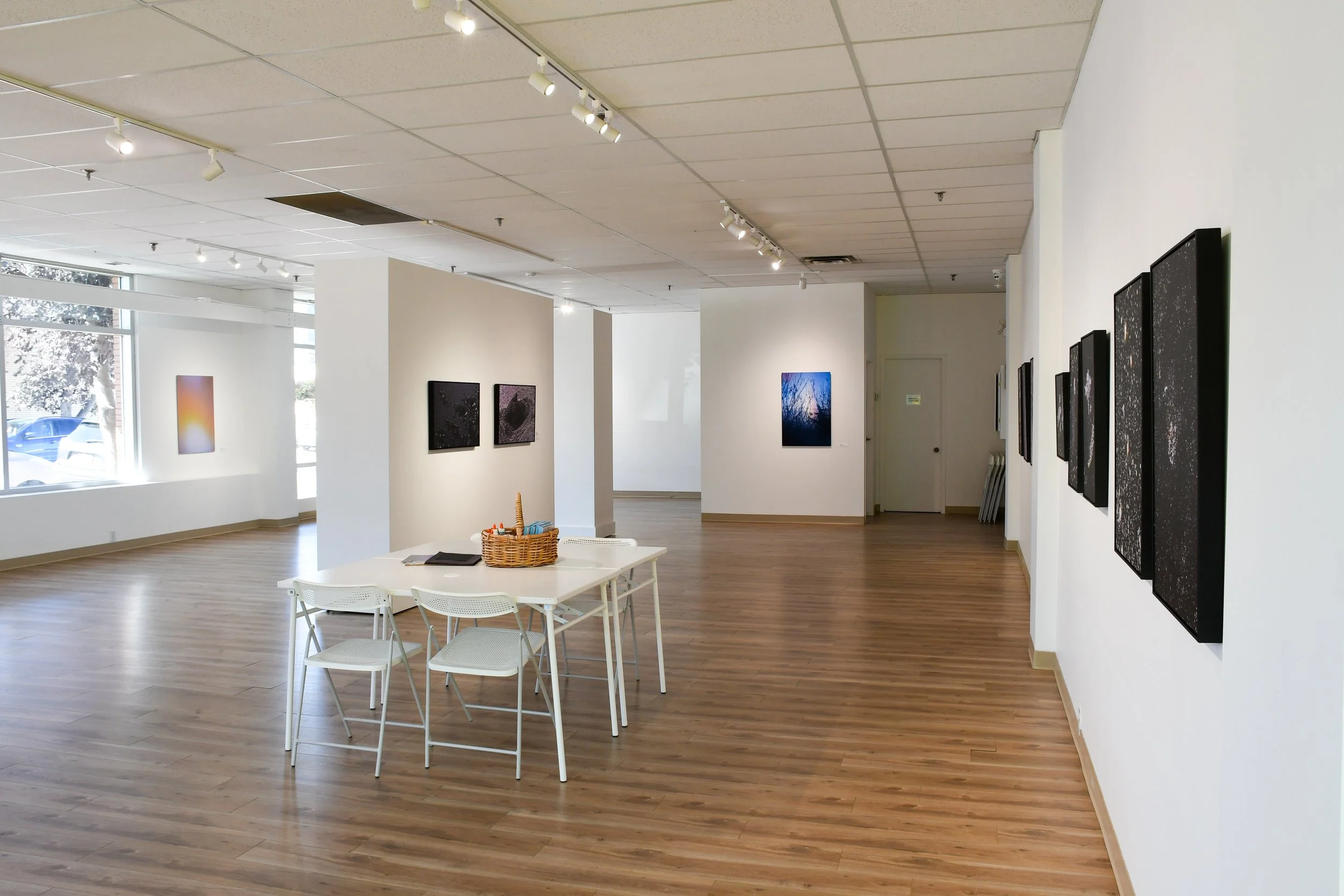
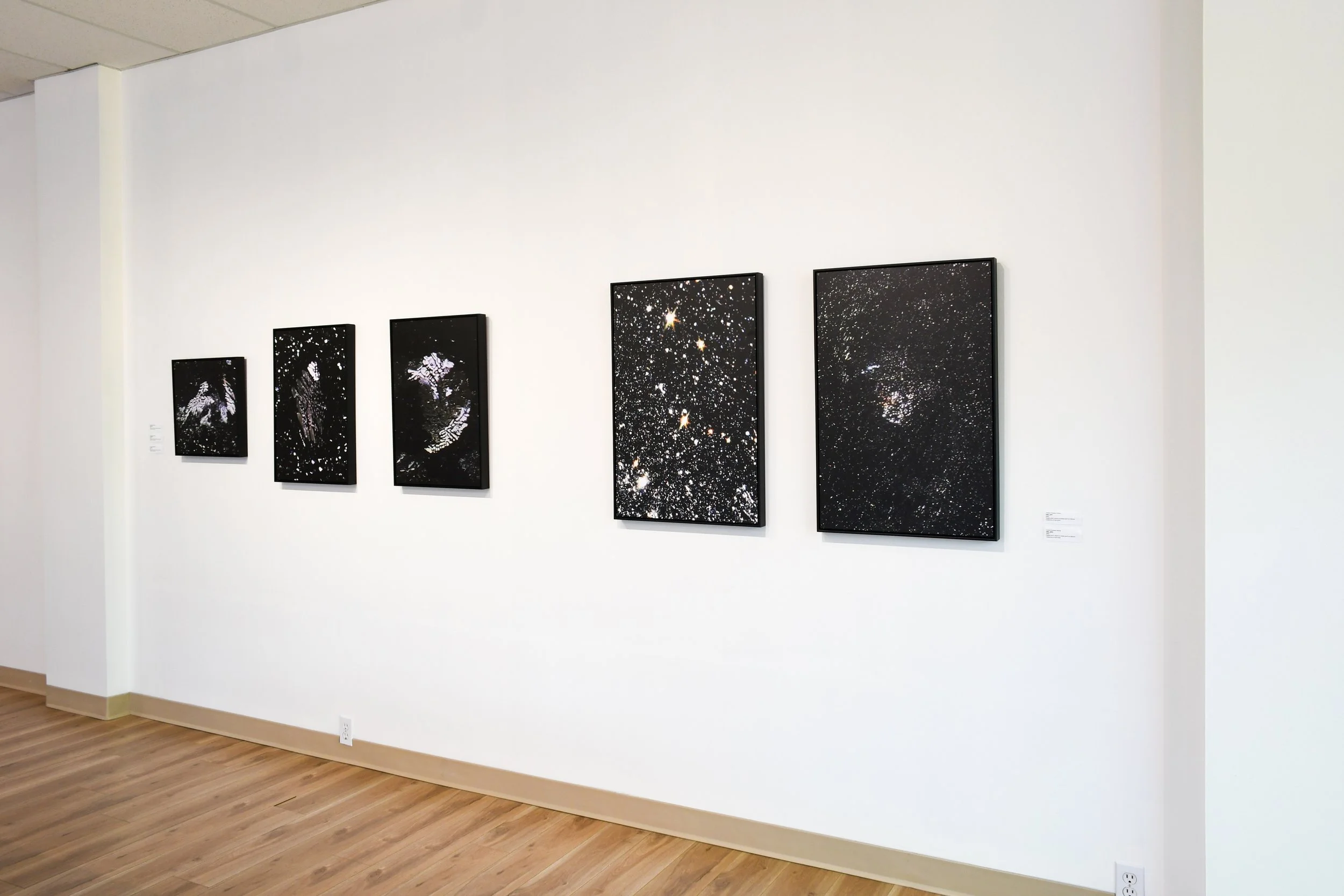
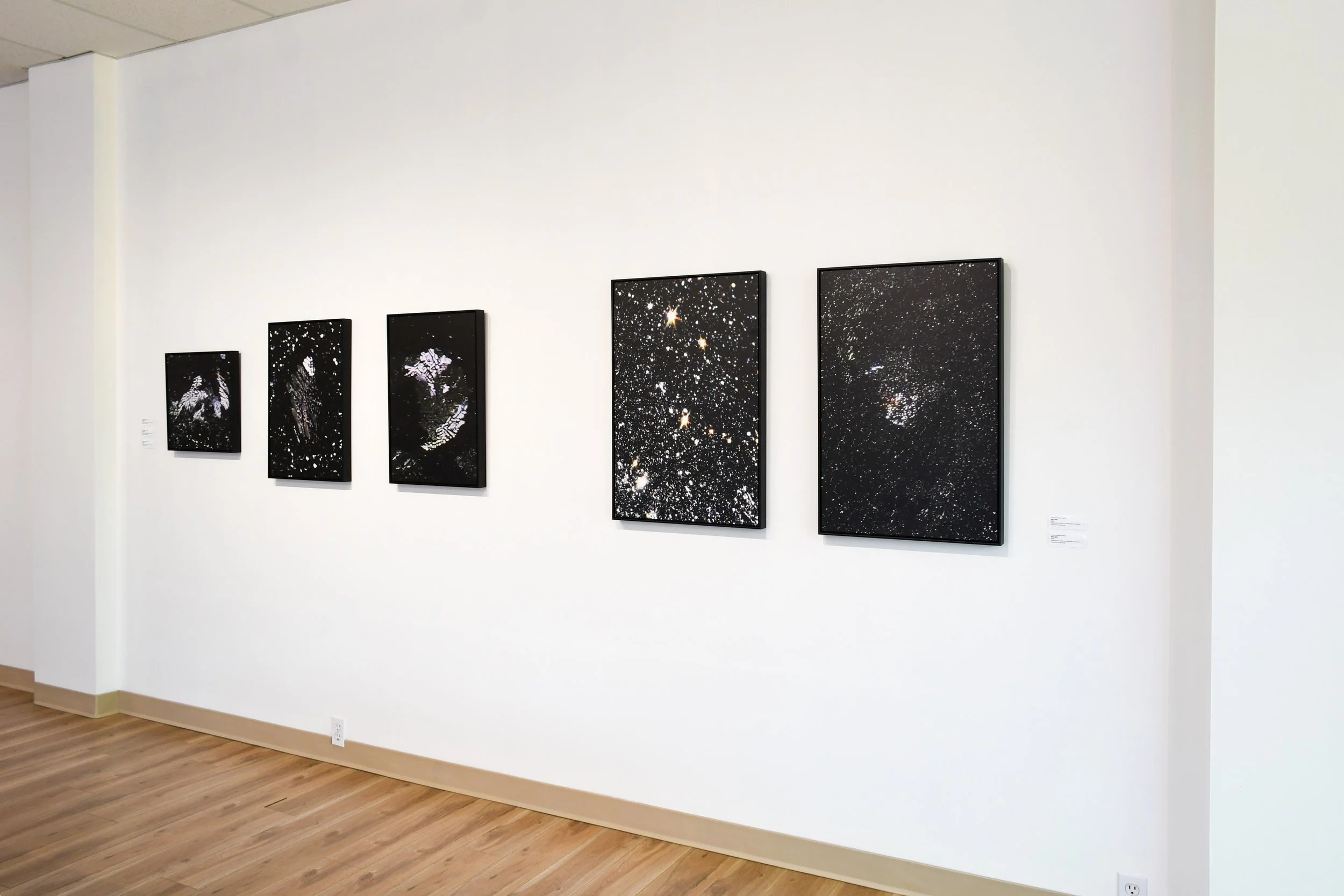
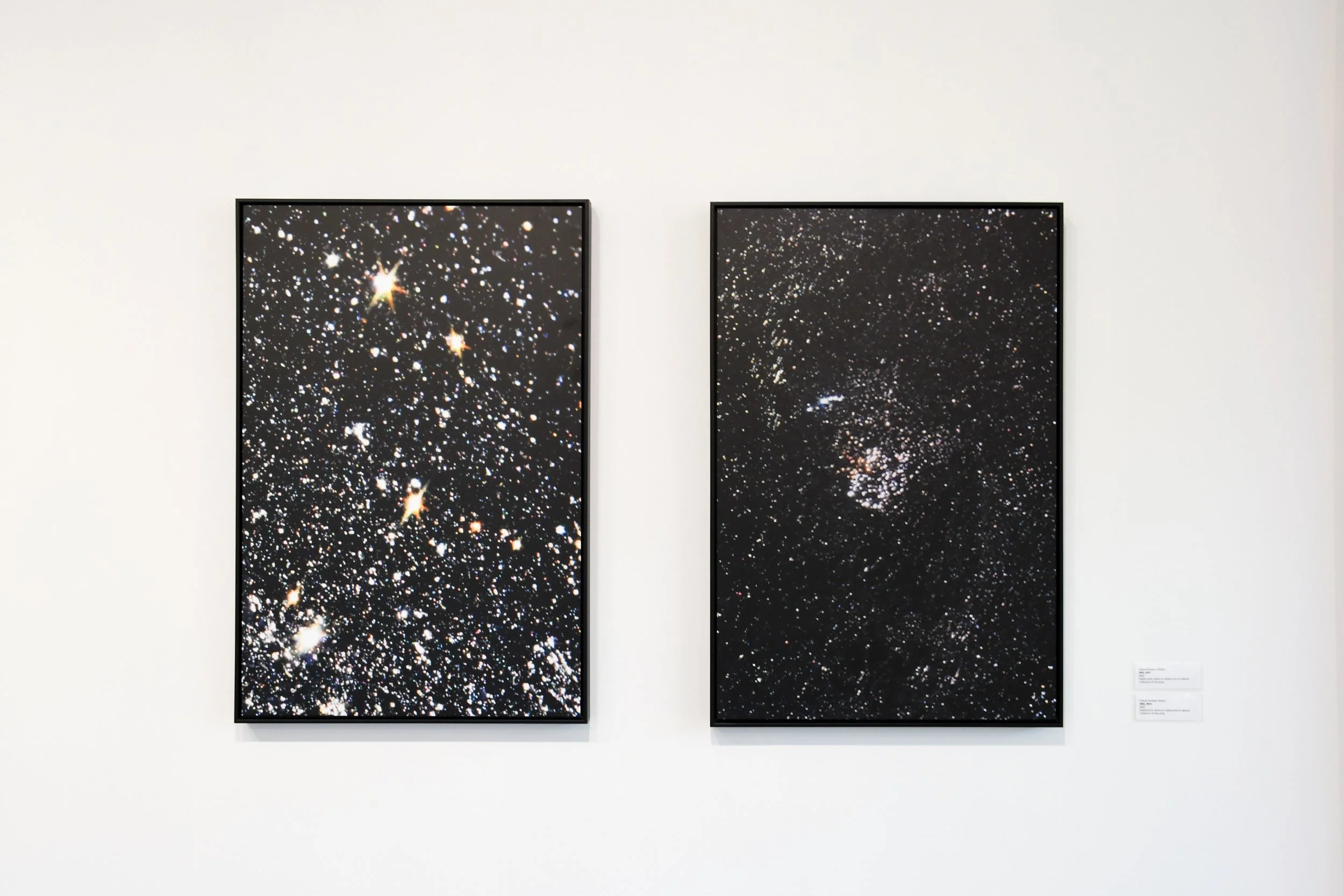
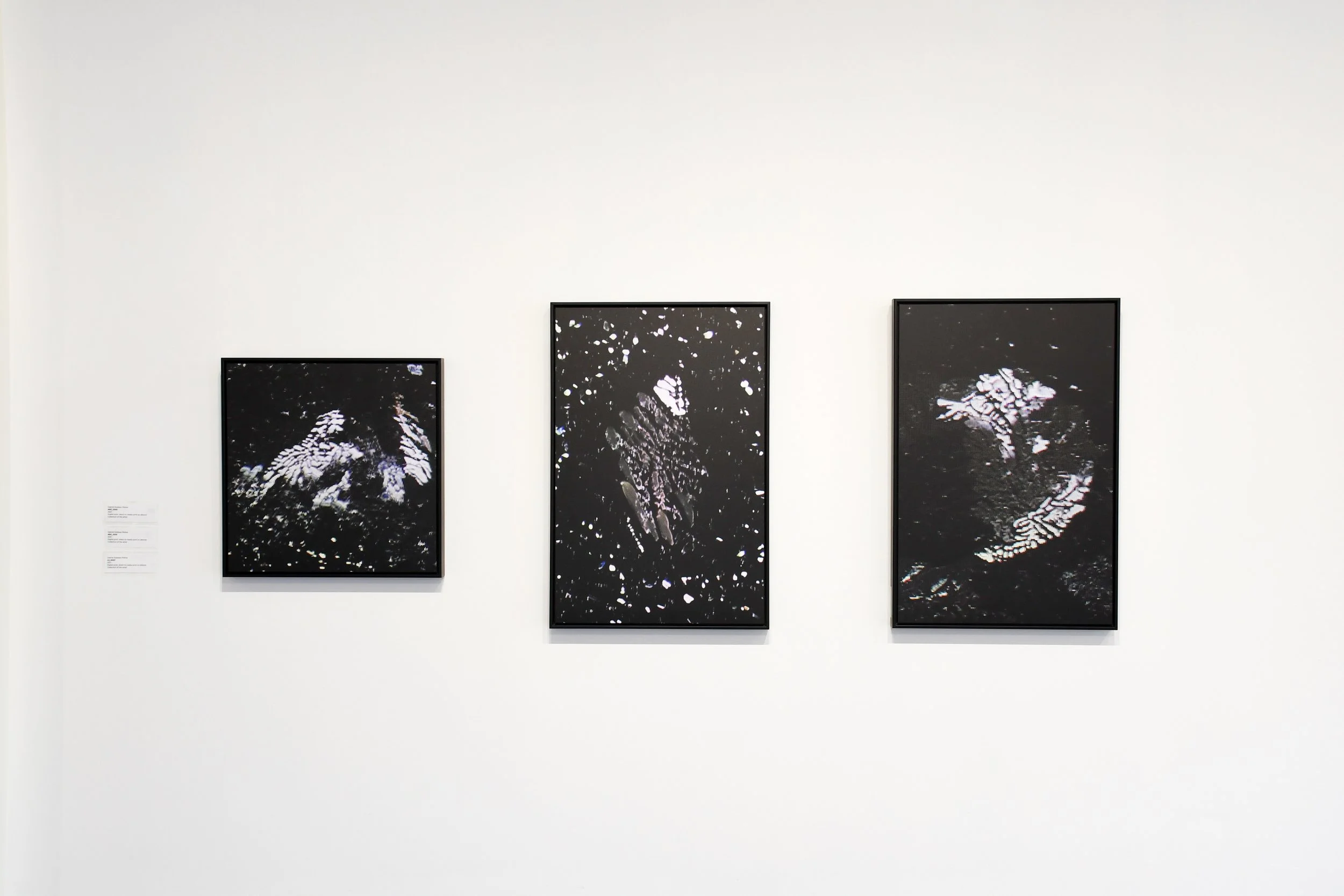
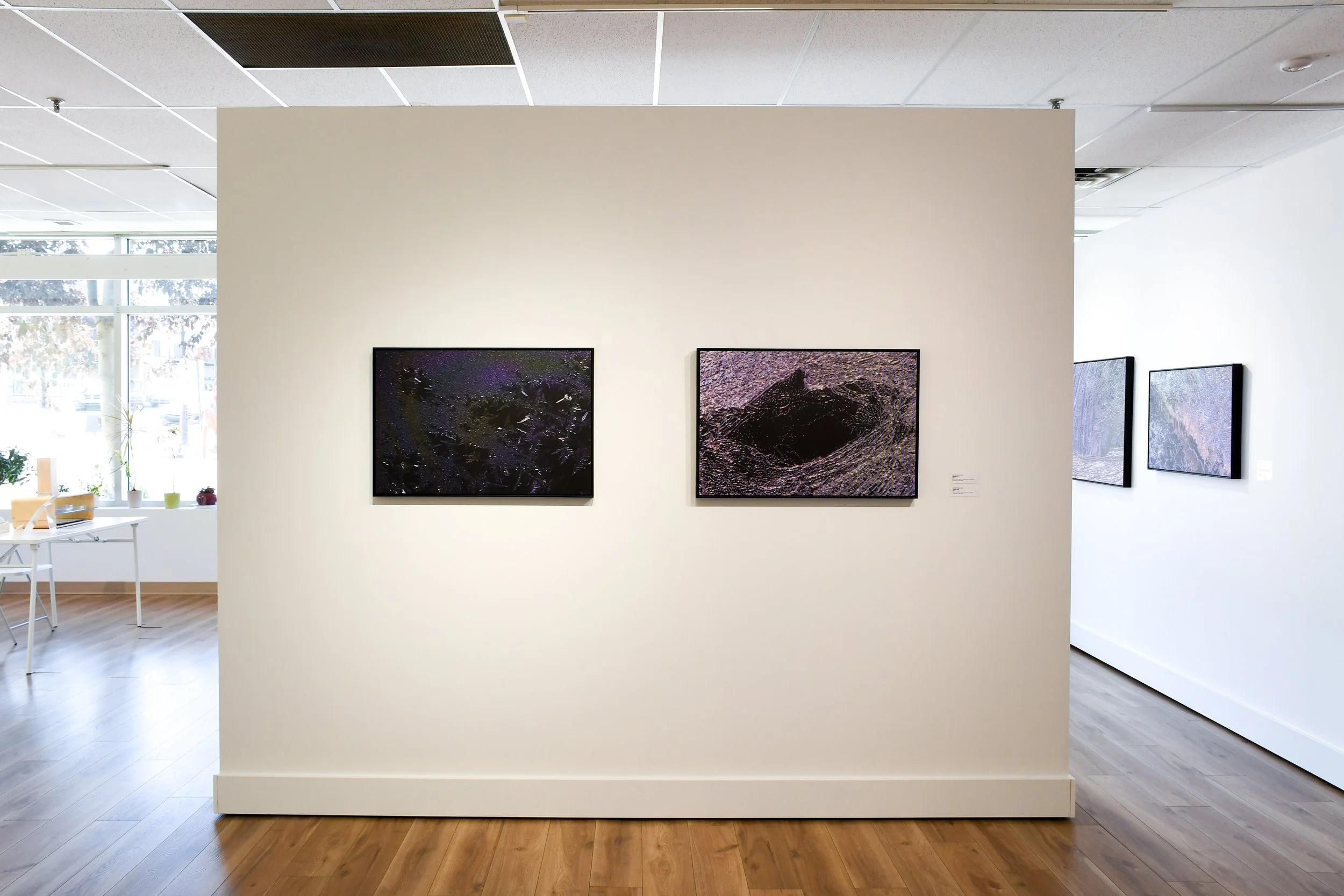
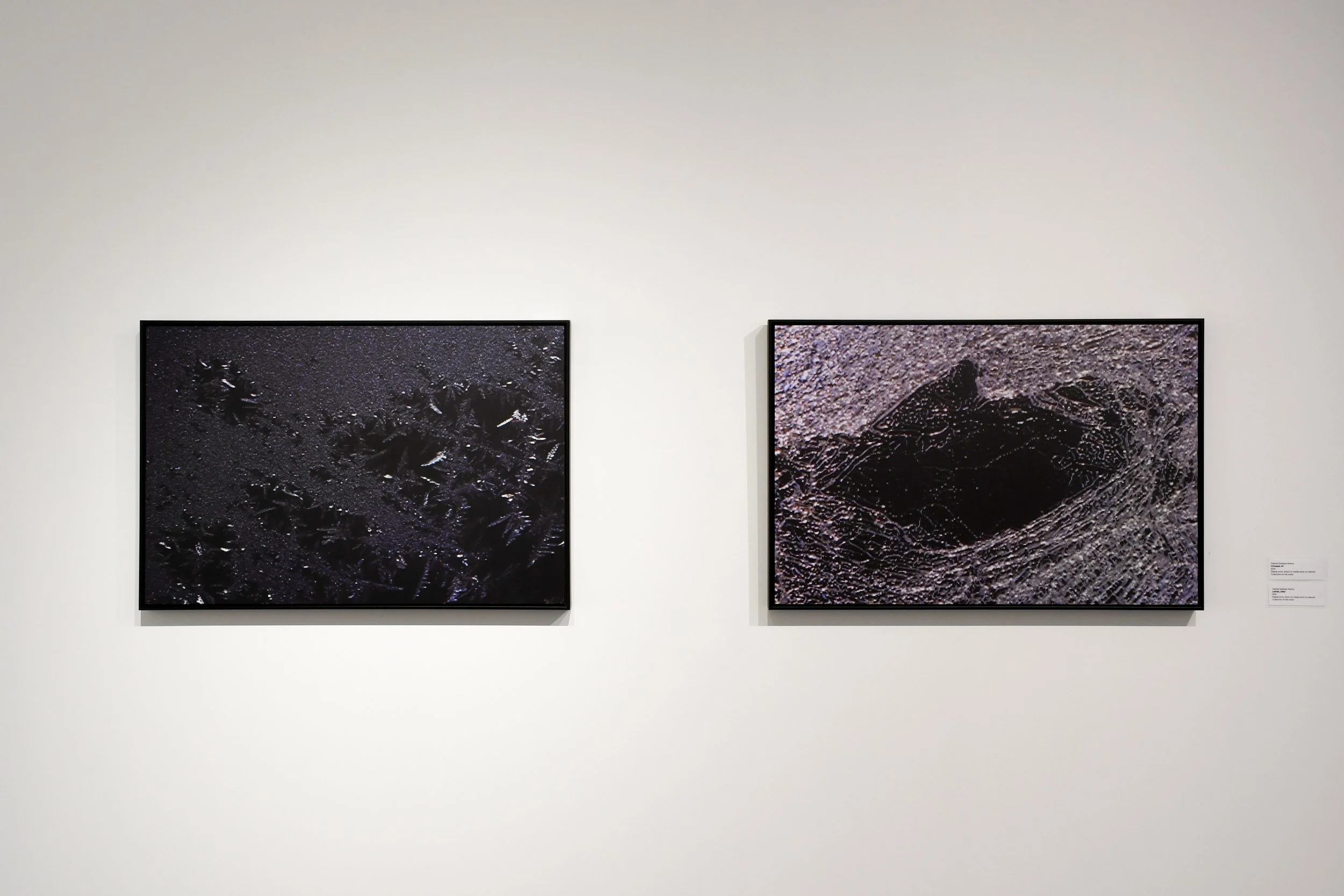
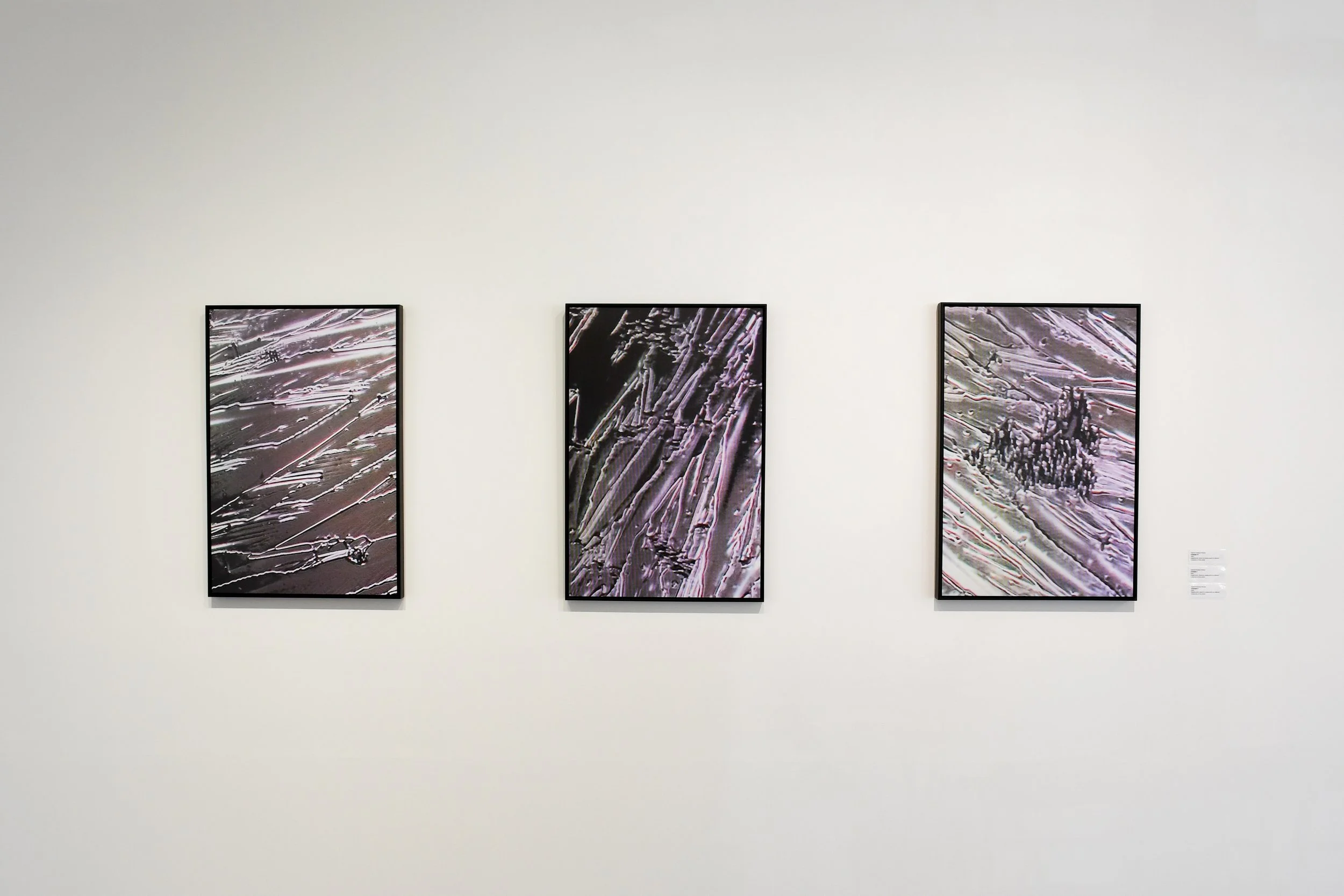
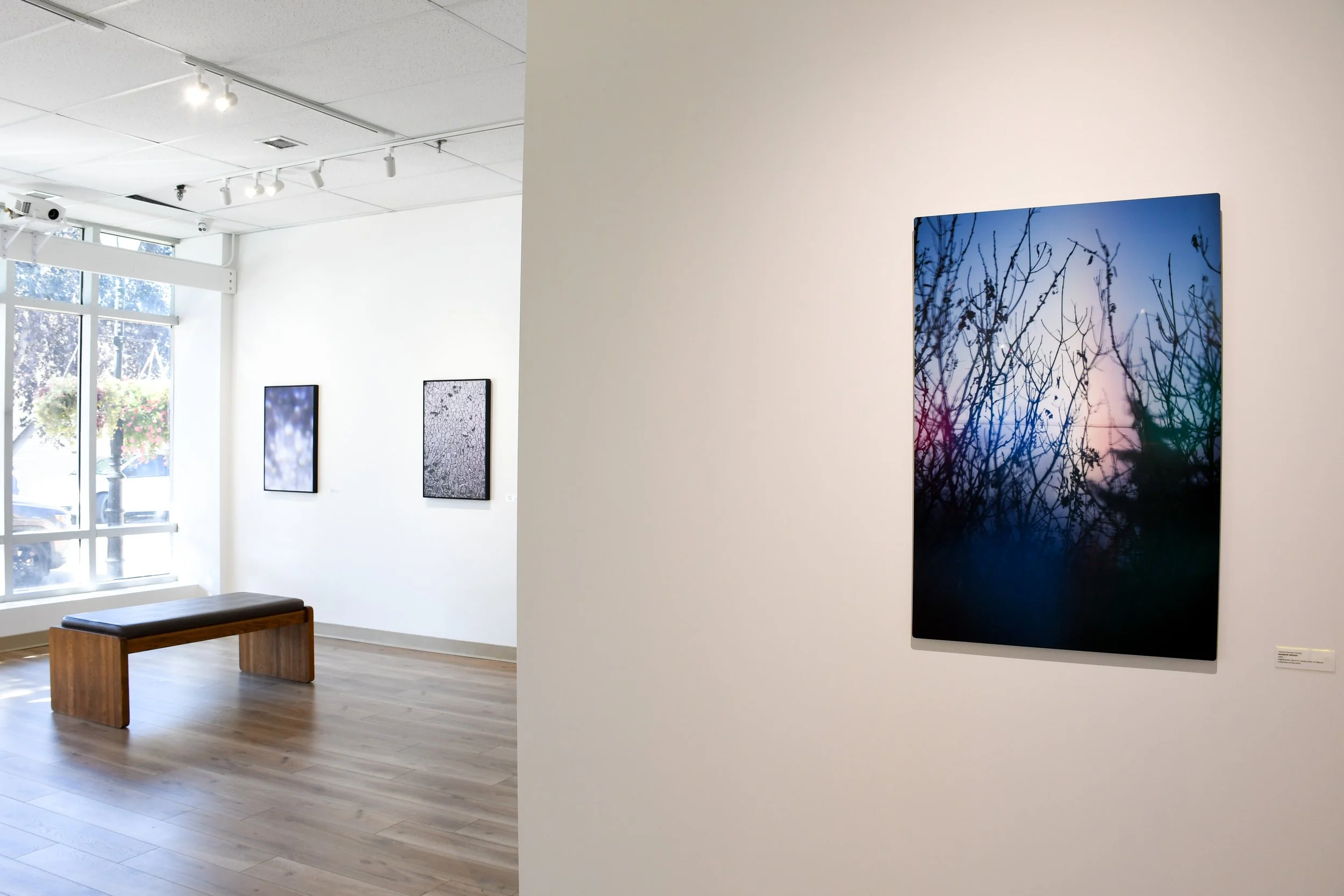
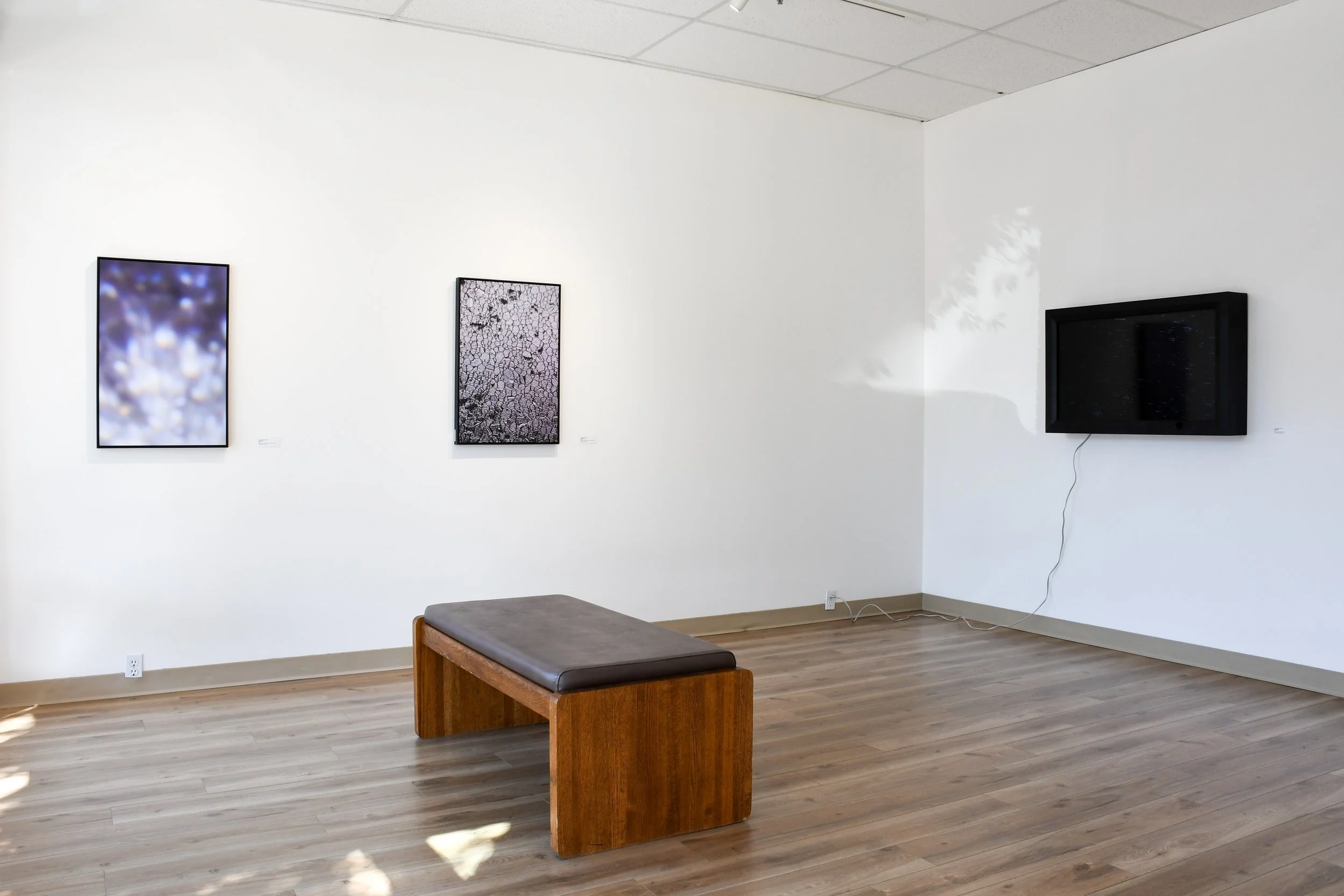
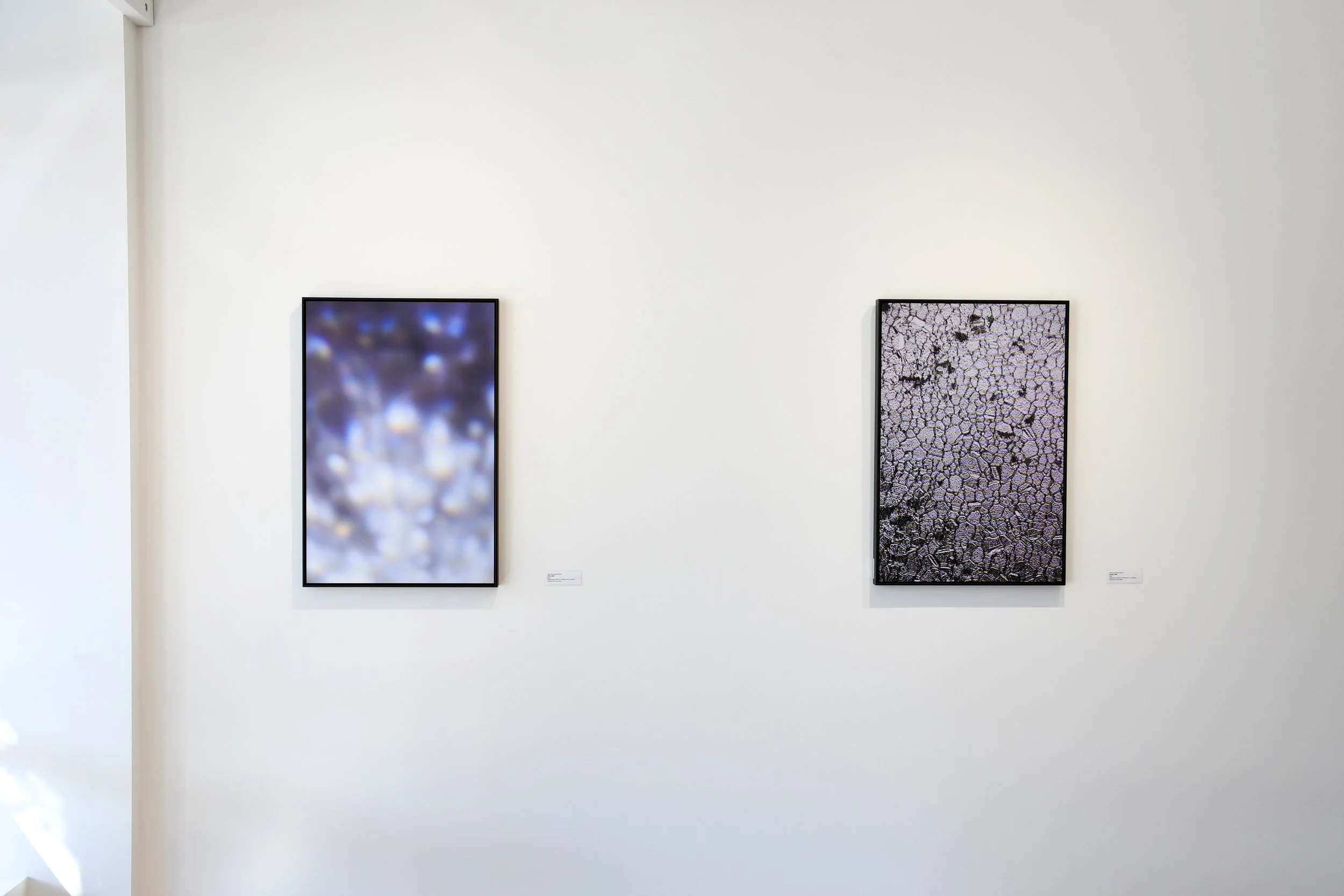
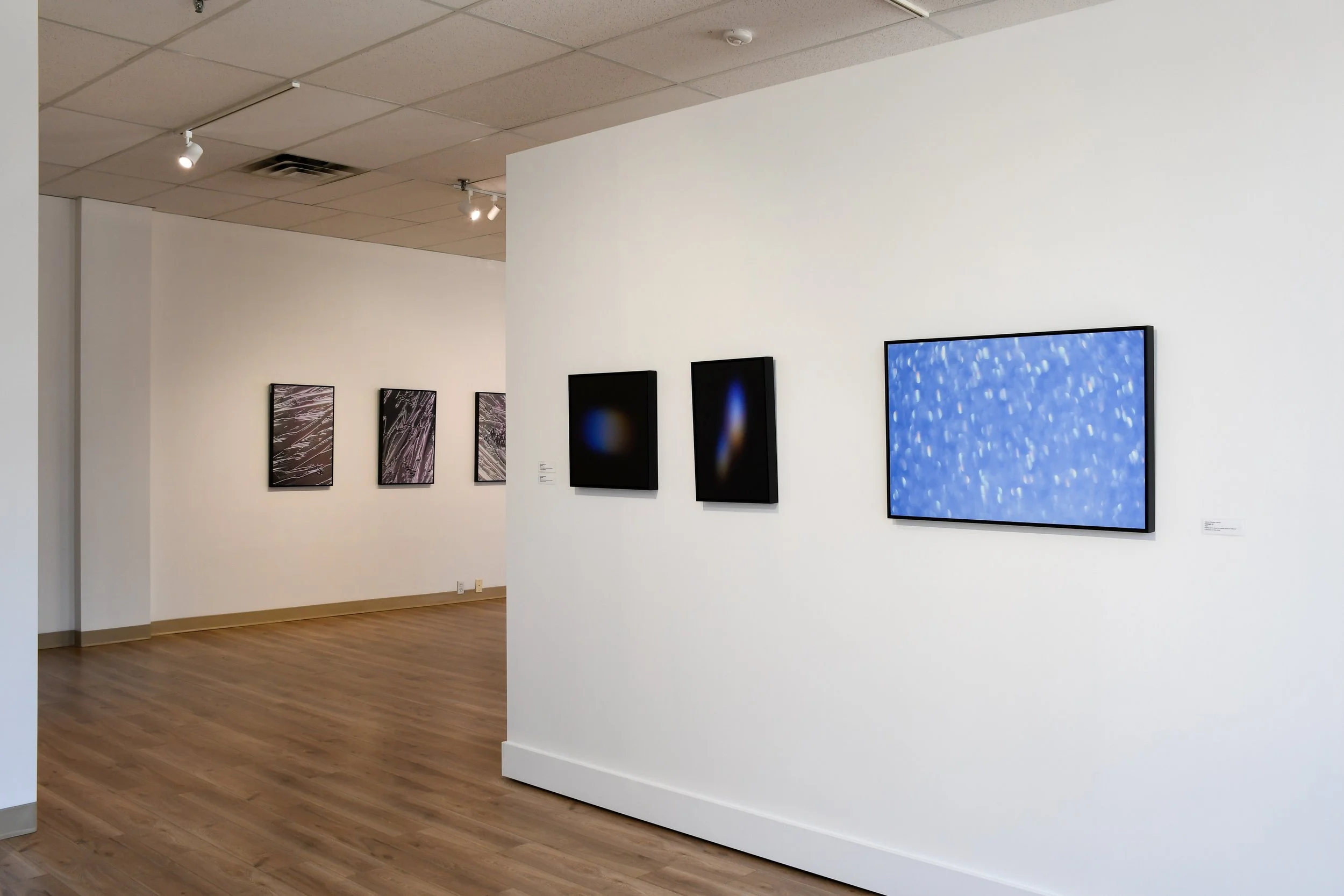
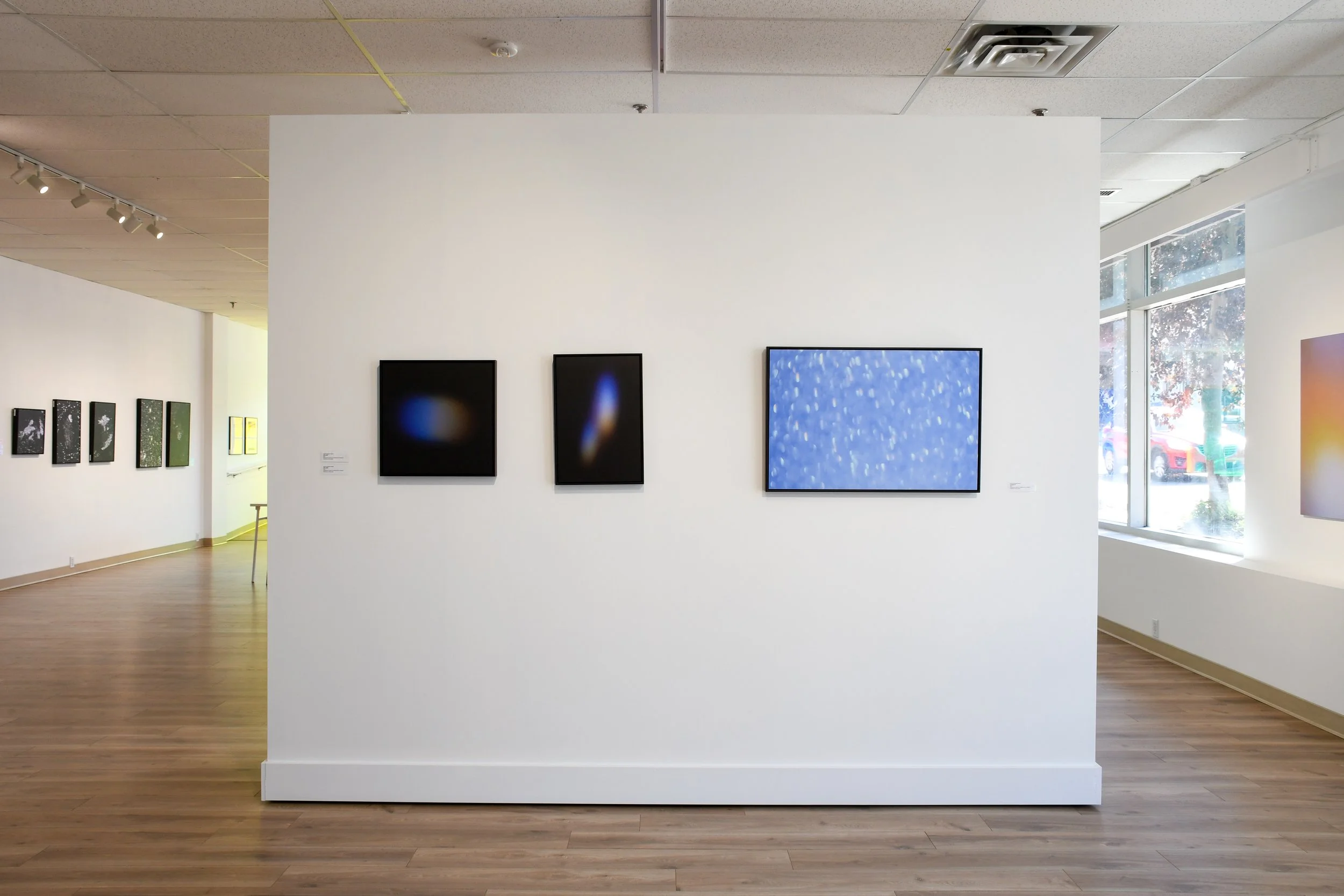
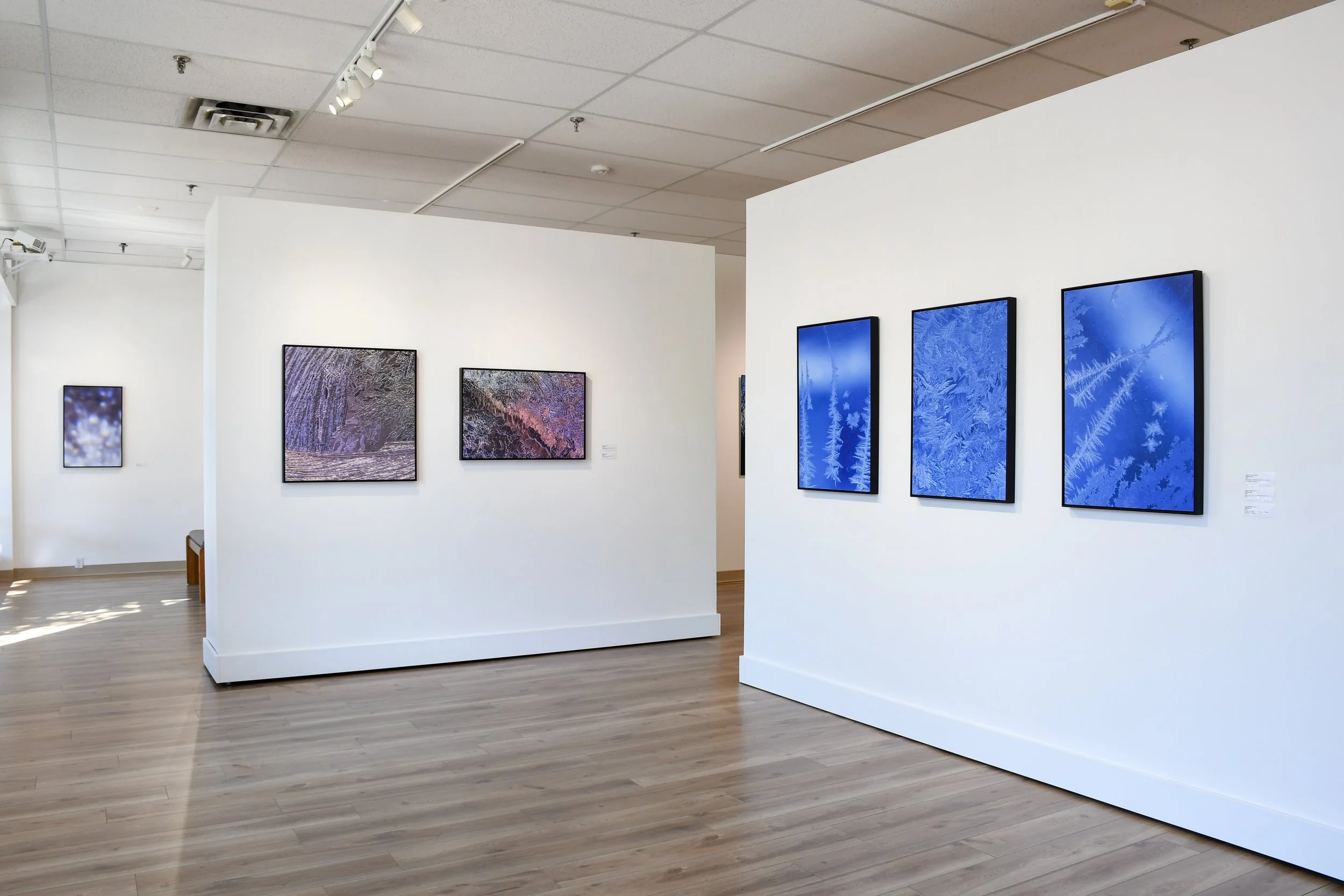
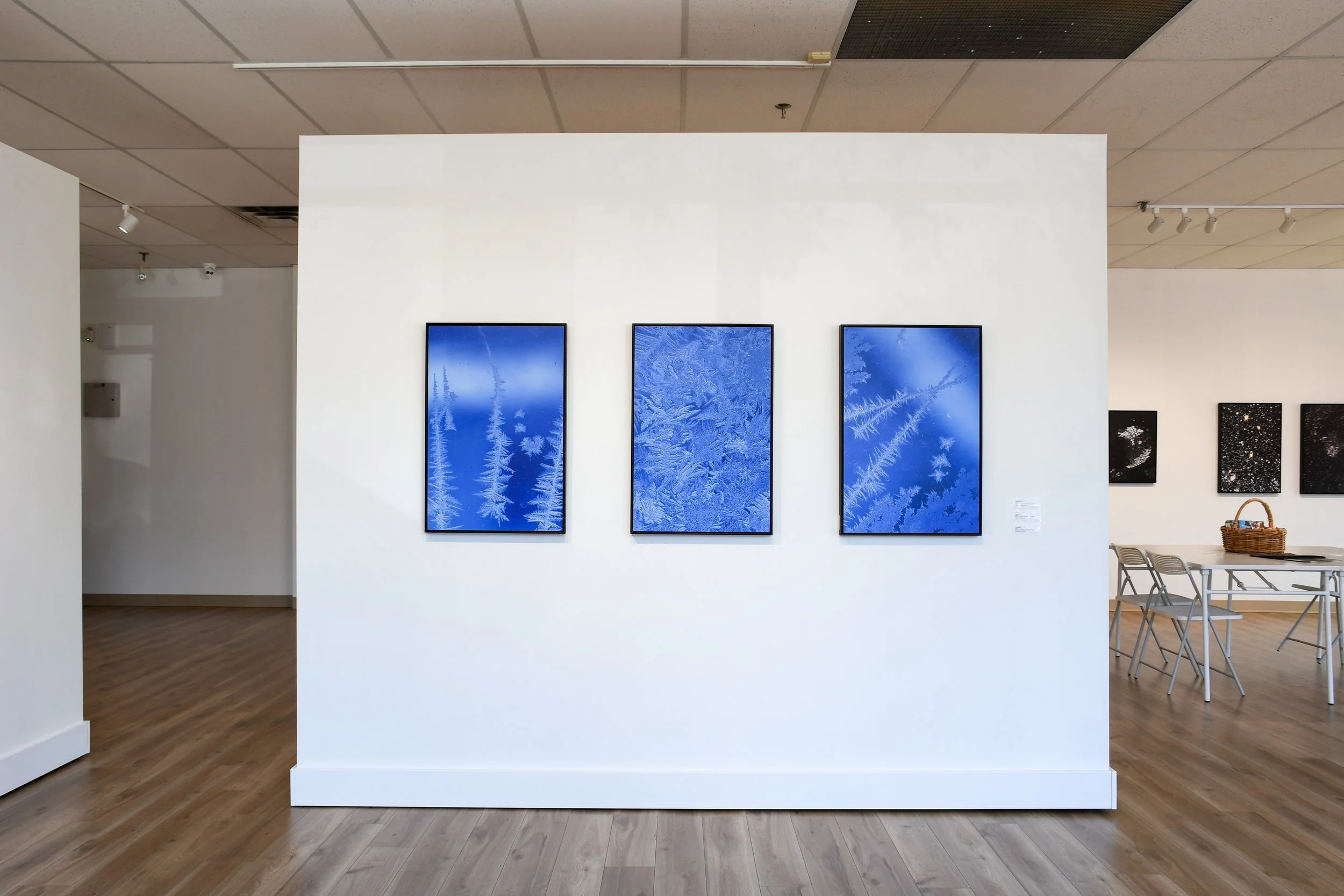
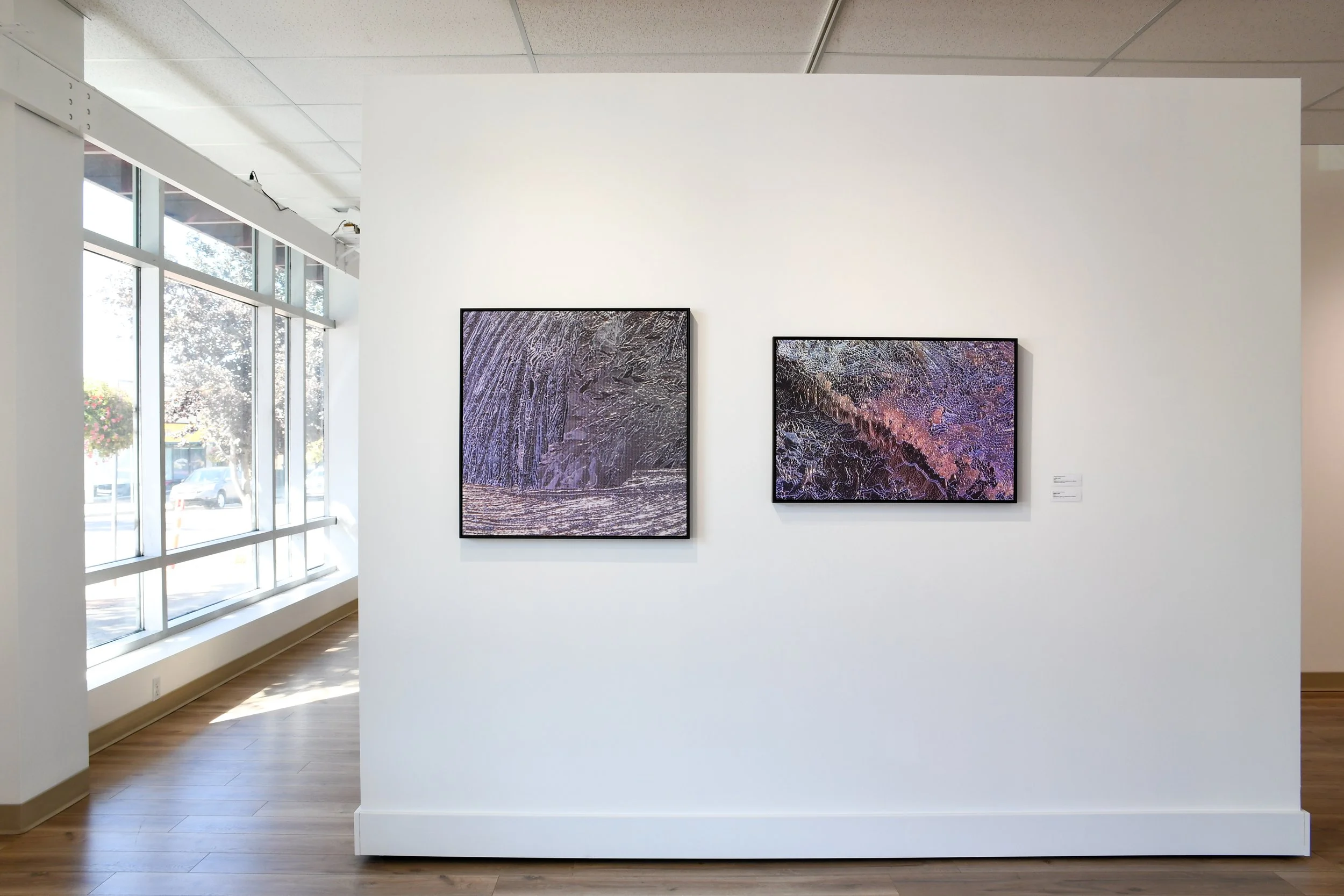
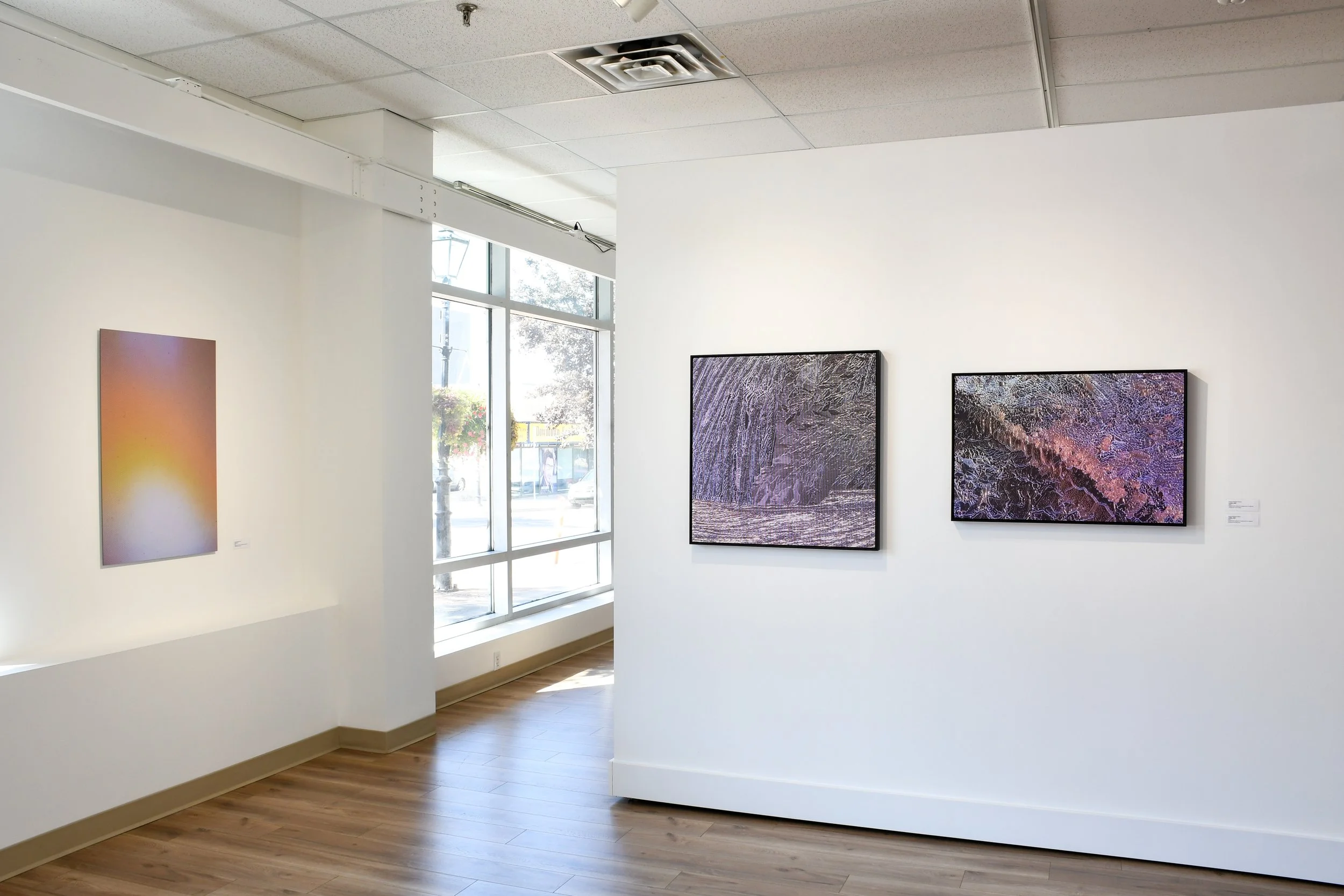
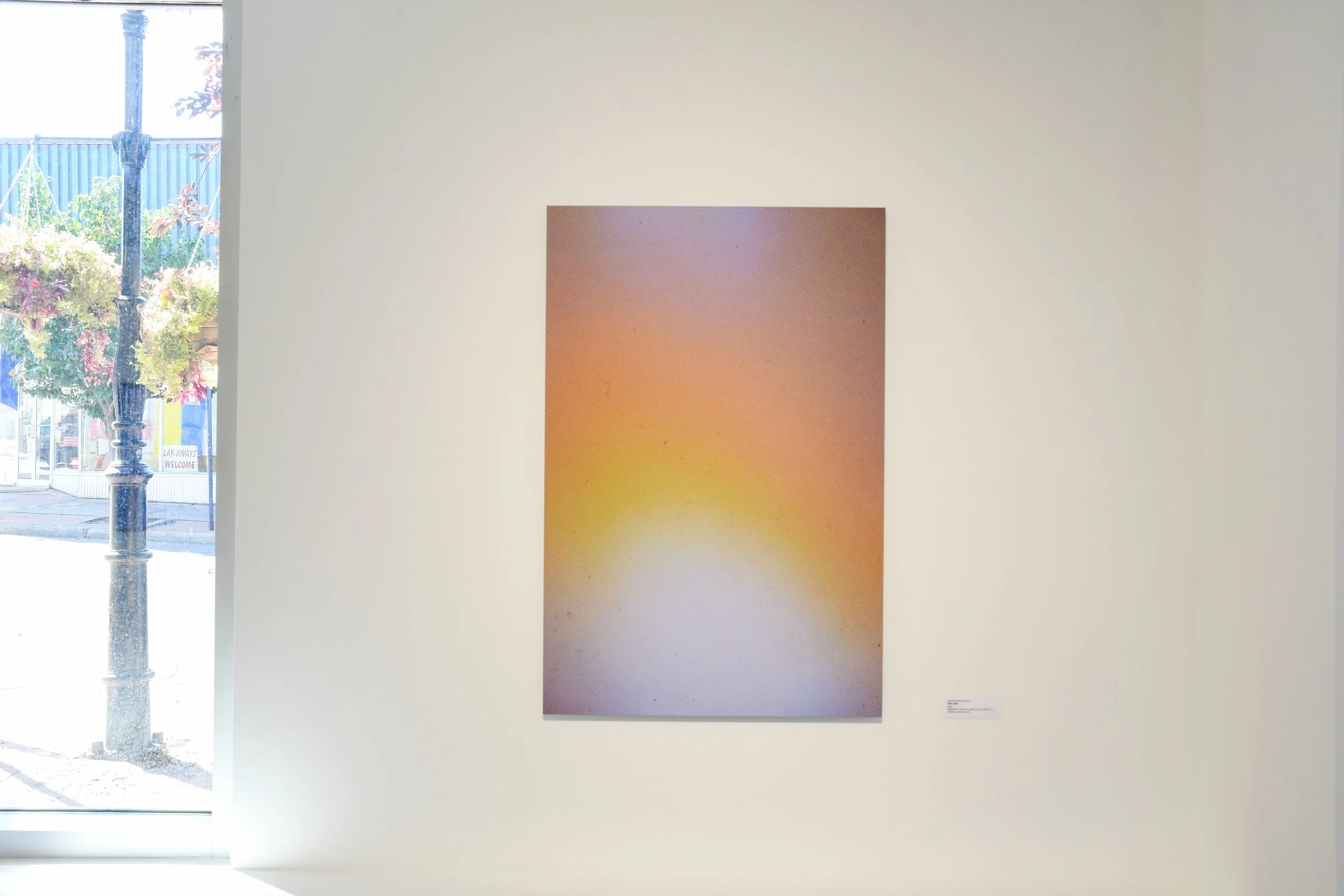
Scouring Heaven and Earth presents a selection from Gabriel Esteban Molina's larger Criologia series, showcasing the artist's experimental photography practice. The collection began with numerous photographs of ice crystals frozen on the windows of Molina's home in the winter of 2021, with the name deriving from the word cryology - the study of snow and ice. As part of his artistic process after photographing, Molina uploads the images to his computer and employs his camera much like a scientific instrument: zooming in and searching for compositions which he rephotographs from the screen, playing with blur, focus and scale to create different textures, lighting and effects. Rephotographing allows Molina to experiment with abstraction and explore patterns and possibilities within the images.
The work revels in the human proclivity towards pareidolia - the tendency to perceive a specific or meaningful image in a random or ambiguous visual pattern. For example, looking for animals in the shapes of clouds, or faces in the lines of a cliff escarpment. In a few of the pieces, the imagery ofice crystals remains evident. Others appear familiar but unrecognizable. Could it be a low-res satellite image taken of the cosmos? A glitch rendered by artificial intelligence? A microscopic investigation of plant growth? The body of work is further contextualized by the artists elderly dog passing away on the second day of the original photo-spree. Conceived amidst grief, the work raises questions about why us humans constantly search for patterns and meaning. Is it a distraction, a coping mechanism, entertainment, meditation, something hardwired into our brains?
Ultimately, Molina aims to draw connections between artistic pursuit, science and religion as methods for discerning meaning from existence. Scouring Heaven and Earth invites viewers to zoom way out and to dive in deep. To ask questions and be imaginative and to pay attention to the little and big things happening all around them.
ARTIST STATEMENT
Scouring Heaven and Earth is an exhibition of my Criologia series that use macro photos of ice as a source material. These works are made by taking numerous photographs of ice crystals on the frozen windows of my old home in the winter of 2021. On the second day of this photo spree, my elderly dog passed away, and I continued photographing to try and distract myself from the immense grief by getting lost in the patterns and lights created by the ice. The photos were taken throughout the day and at different locations through the house, and at different times of day. The rephotographing process lets me explore patterns and forms on a different scale leading me to structures and landscapes resembling ice fields, mountain ranges, islands, star fields, and globular clusters. Sometimes, the images lead to colour fields, or imagery that doesn’t resemble anything in particular to me, but might resemble something to someone else.
My experimental lens-based practice is inspired by techno-romanticism, glitch aesthetics, and the unintentional to try and capture moments and create spaces. As part of my process, once I’m done photographing, I upload the images to my computer and use my camera much like a scientific instrument, zooming in and searching for compositions which I rephotograph from the screen, playing with blur, focus, and scale to create different textures and lighting and materiality. Rephotographing lets me alter the images further and play with abstraction. I let myself be guided by the phenomena of pareidolia and apophenia, where random information is perceived as meaningful or in the case of pareidolia as resembling a face or person, or looking for animals in the clouds. The search for interesting imagery and forms is very observational and meditative. Through this process-based abstraction, my aim is to draw connections between artistic pursuit, science, and religion as methods for discerning meaning from existence and the resulting works appropriately resemble celestial bodies, satellite imagery, and microscopy.
With this scientific aesthetic and influence, the works are given naming conventions similar to those used for astronomical bodies or satellite imagery; LoRISE is a reference to HiRISE or the High Resolution Imaging Science Experiment, which are a series of cameras observing Martian terrain. LS refers to Landsat, as in satellite imagery from Earth, NGC references the New General Catalogue of Nebulae and Clusters of Stars, and AFM is an acronym for Atomic Force Microscopy, the method of using a sharp tip to map the counters of surfaces and produces images at an atomic scale.