GLITCHENER, GLITCHERLOO, AND CAMBGLITCHE at CAFKA.25 Public Art Biennial in Kitchener & Waterloo, Ontario










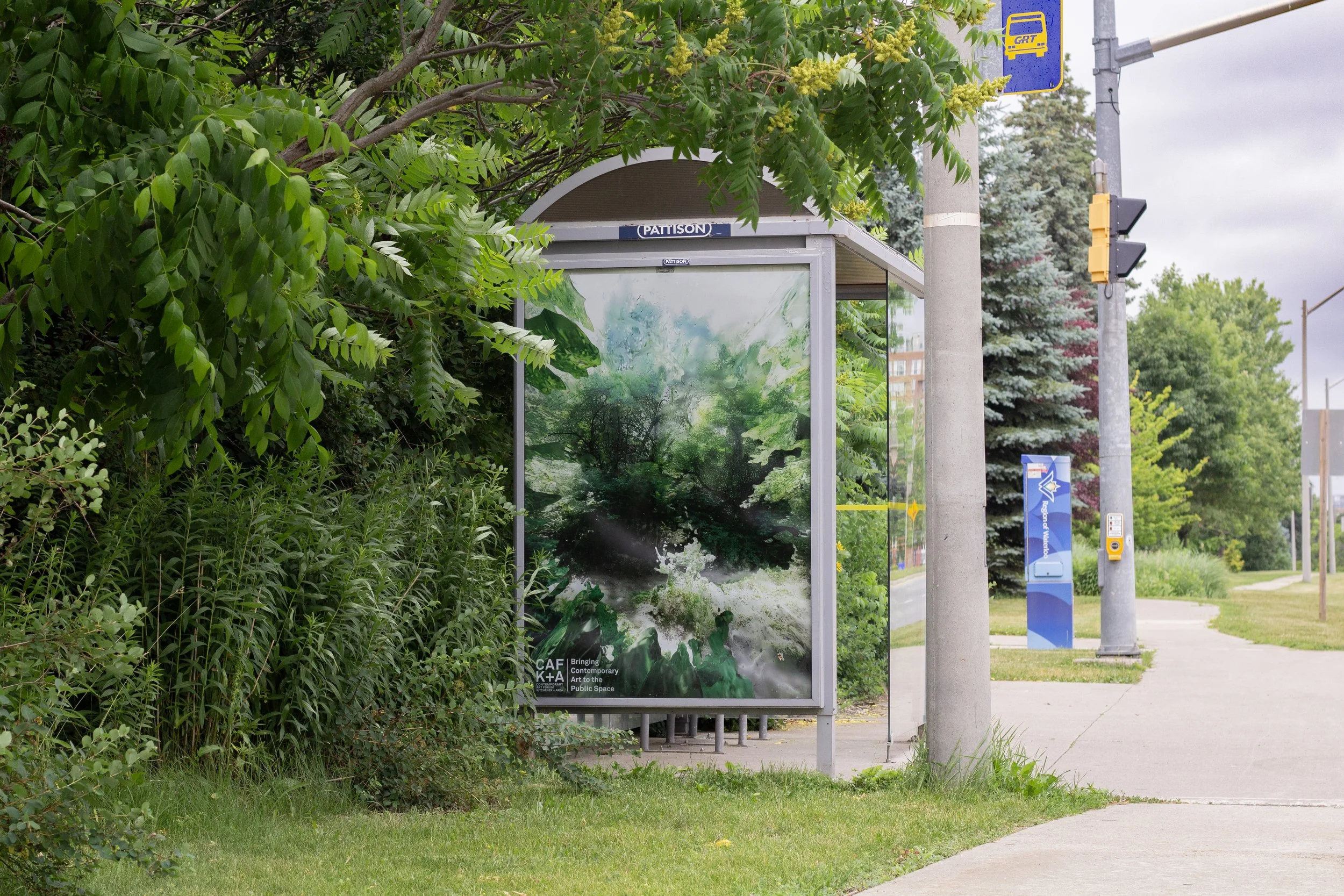

abisola oni, Adam Basanta, Ben Gorodetsky, Brandon Hoax, Don Kwan, FASTWÜRMS, Gabriel Esteban Molina, Jacob Irish, lagomorphhh, Laura Kay Keeling, Miles Rufelds, naakita f.k, Natasha Lavdovsky, Richelle Forsey + Anna Gaby-Trotz, Roda Medhat, Sophia Oppel, Syrus Marcus Ware.
CURATORIAL STATEMENT
CAFKA.25 draws inspiration from the intricate ecosystems of the forest understory, where life flourishes in the fleeting glow of dappled light and where intricate microhabitats thrive in the shadow of giants. CAFKA.25 considers the possibilities of an urban understory where, below the tall buildings and executive suites, we see a rich tapestry of entwined narratives and a deep desire for balance and community.
Through the works in the biennial, we are searching for the quiet places where life is nurtured and supported atop stable ground, and our understory serves as a place of shelter and intimate discovery where each artwork presents a bridge between the seen and unseen in everyday life.
CAFKA invites you to become part of the understory, to travel beneath the towering canopy, and become one with the oft-stepped on and easily overlooked.
ARTIST STATEMENT
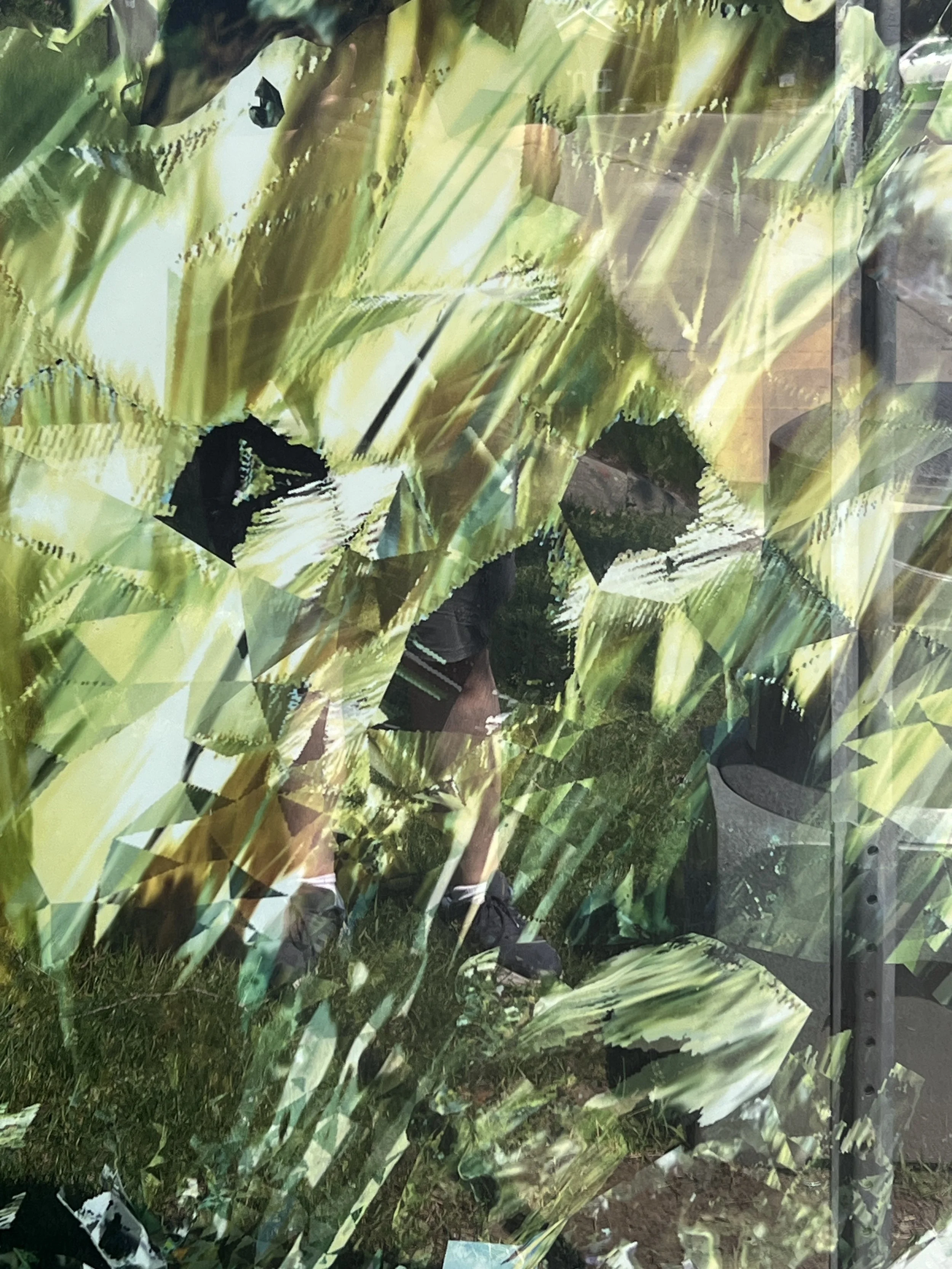
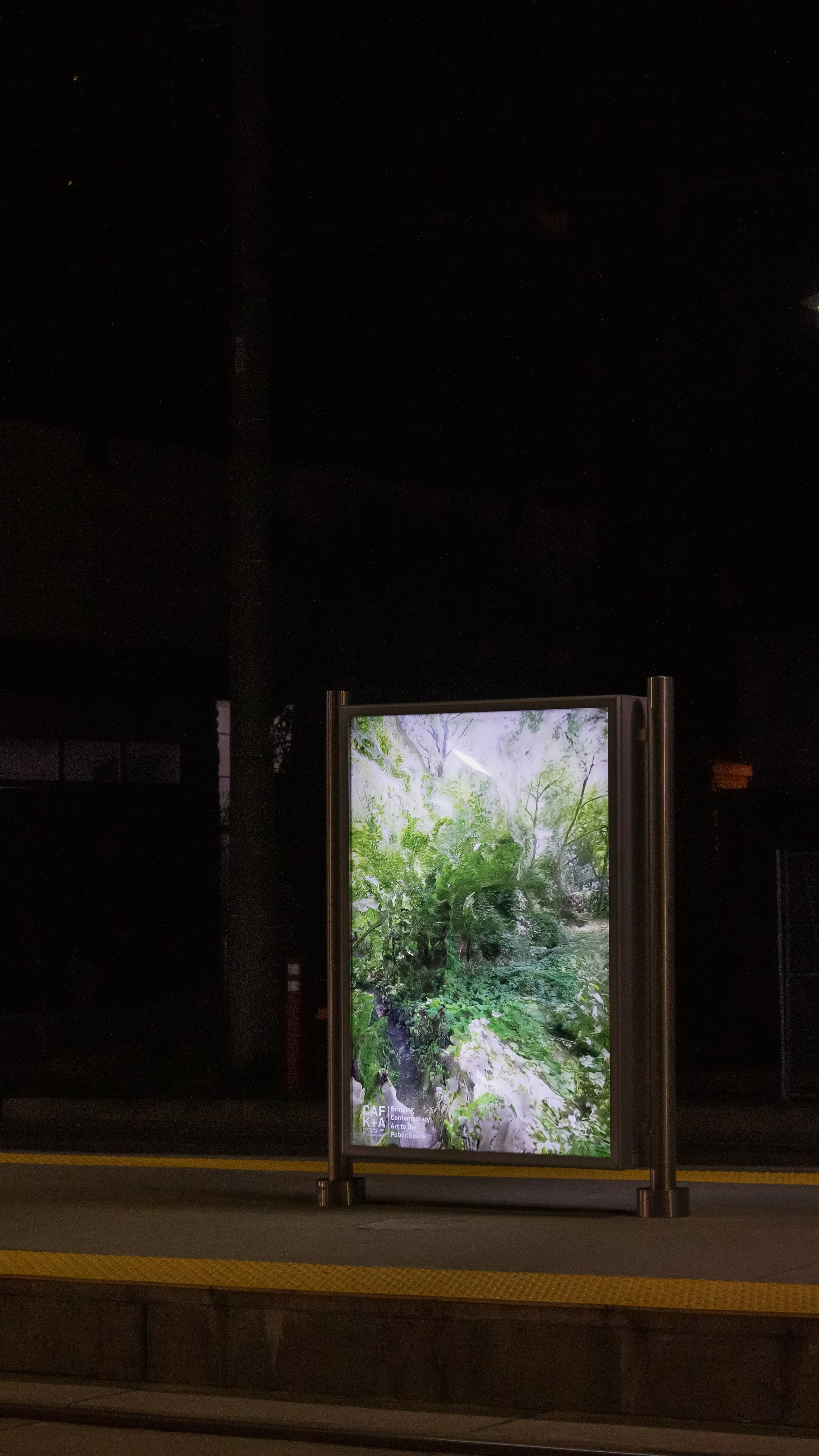
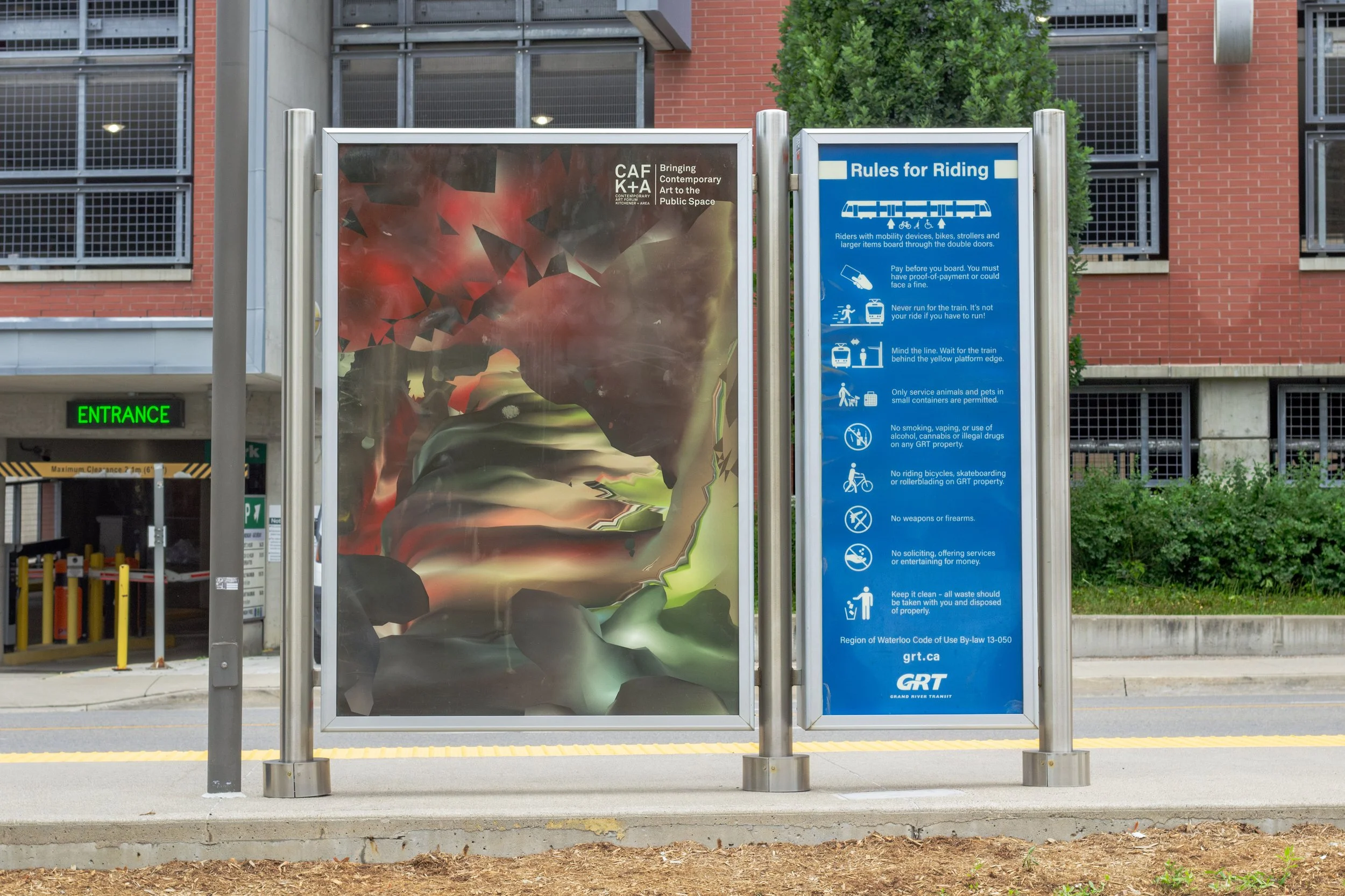
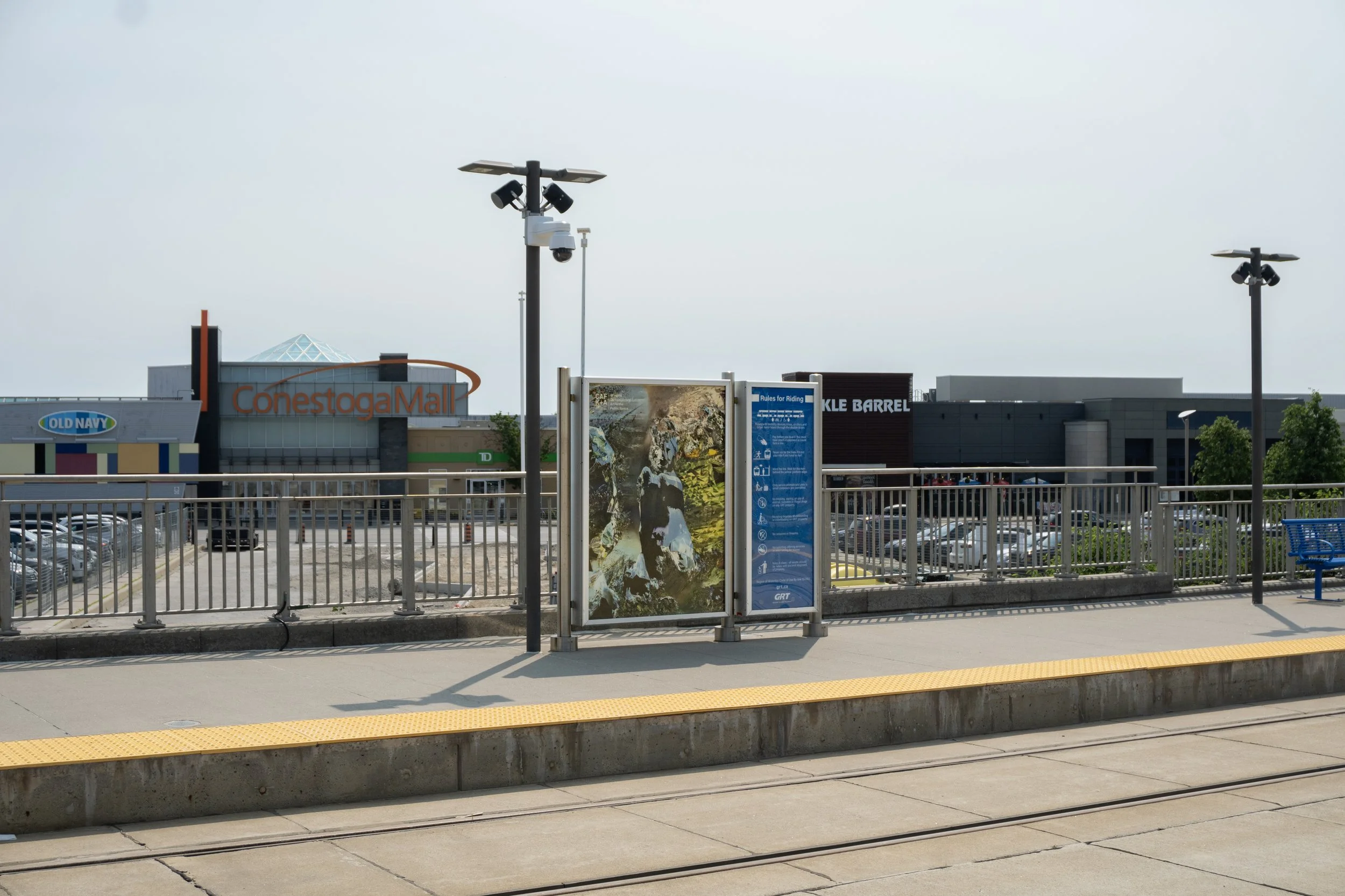
For the CAFKA.25 Biennia, I was flown out to Kitchener and was given a guided tour of sites throughout the region with CAFKA staff and my GoPro. The resulting videos were turned into stills and fed into the photogrammetry software creating massive models of Kitchener, Waterloo, and Cambridge. Through the process of creating the models several new glitches were encountered which resulted in beautiful fields of color and form, bearing some small semblance to the source landscape but just abstract enough to let the mind wander and discover new sights and creatures as though one were looking for animals in the clouds. It's important for me to take into account the immediate space, including the geography and location of any site, to ensure that even in an abstraction there remains something that people in the area could connect with without even necessarily recognizing it. The size of the data sets, quality of stills derived from video, and harnessed errors in texture processing led to unique glitches for each of the cities which were scanned. In this work the glitches speak to the precariousness of digital documentation in the face of the current ecological moment. As we see our environment change rapidly before our eyes, digital media will preserve some of what we once had, but how reliable is it in the face of constant technological advancement and the volatility of information storage.